28 posts tagged with "tutorials"

View All Tags

How to Persist Zenoh Data

· 9 min read
Anthony Cavin
Co-founder & CEO - Data, ML & Robotics Systems


If you're running Zenoh, whether as rmw_zenoh in ROS 2 or as the transport between a robot, a gateway, and the cloud, you'll eventually run into the same question:

"Where does this data actually go? I need to replay yesterday's run, debug a fault from a remote robot, and pull a few thousand frames for training."

There's plenty of material on the communication layer itself: pub/sub primitives, how Zenoh compares to DDS, multi-node setups down to a Raspberry Pi. rmw_zenoh reached Tier-1 status starting with ROS 2 Kilted Kaiju, and it's getting real attention at events like ROSCon.

What's harder to find is the next layer: what happens to a sample after it's published. Connecting a live Zenoh network to something persistent and queryable usually means working around the limits of Zenoh's existing storage options.

This post shows another way. By the end you'll have a Python publisher sending data over Zenoh, a storage backend persisting it automatically, and a query client pulling exact time ranges back out, all without a custom backend or a bridge process.

How to Store MQTT Camera Frames and Binary Sensor Data with a Time Index

· 13 min read
Alexey Timin
Co-founder & CTO - Database & Systems Engineering

Storing MQTT data in ReductStore"

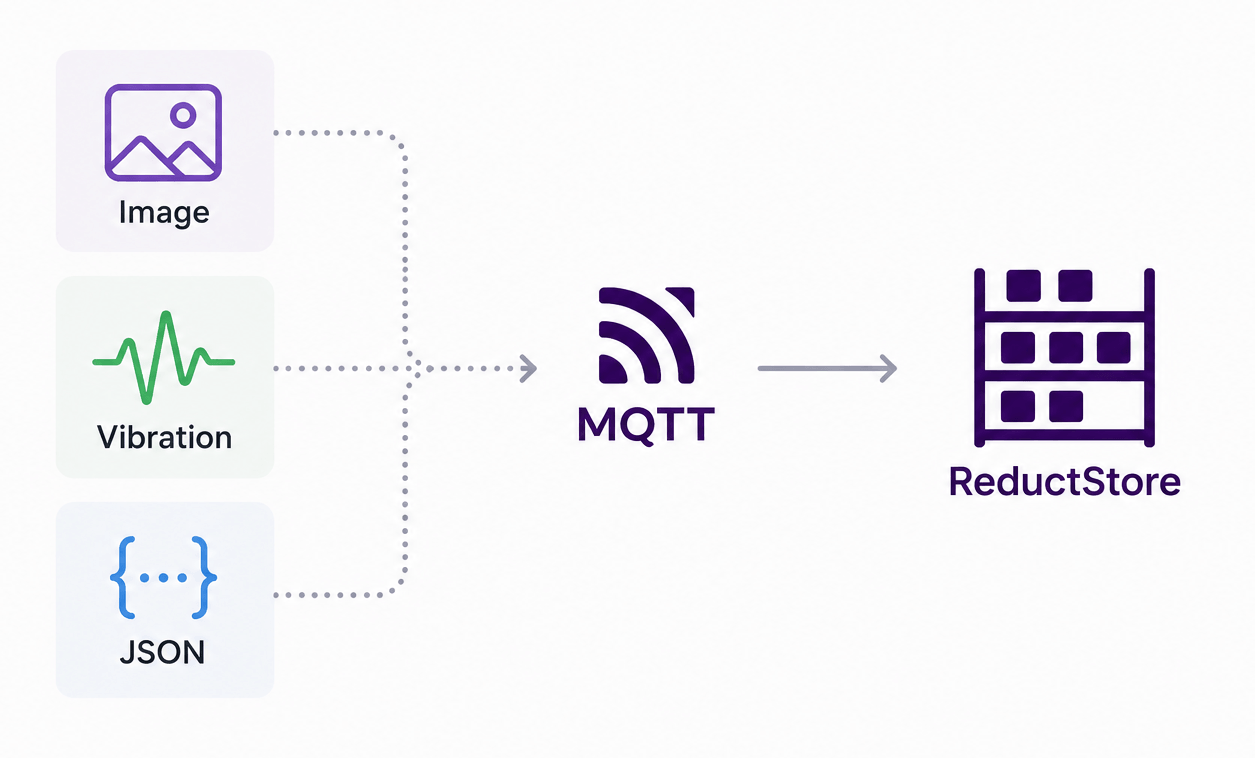
MQTT is a common choice for the communication stack in IoT and robotics applications because it is lightweight and easy to integrate. But many of those applications do not send only small JSON telemetry messages. They also publish JPEG frames, vibration waveforms, audio clips, protobuf messages, and other binary payloads that need to be stored and queried later.

This is where a regular MQTT broker or a traditional time-series database starts to fall short. Brokers are designed for message delivery, not long-term historical storage, and many databases either expect structured numeric fields or make it hard to keep large binary records tied to accurate timestamps.

In this tutorial, we will use ReductBridge to subscribe to MQTT topics and write the raw binary payloads into ReductStore with a time index. This lets you keep camera frames and sensor payloads as they are, while still querying them by time range, labels, and entry name for replay, debugging, and offline analysis.

Building a Resilient ReductStore Deployment with NGINX

· 5 min read
Alexey Timin
Co-founder & CTO - Database & Systems Engineering

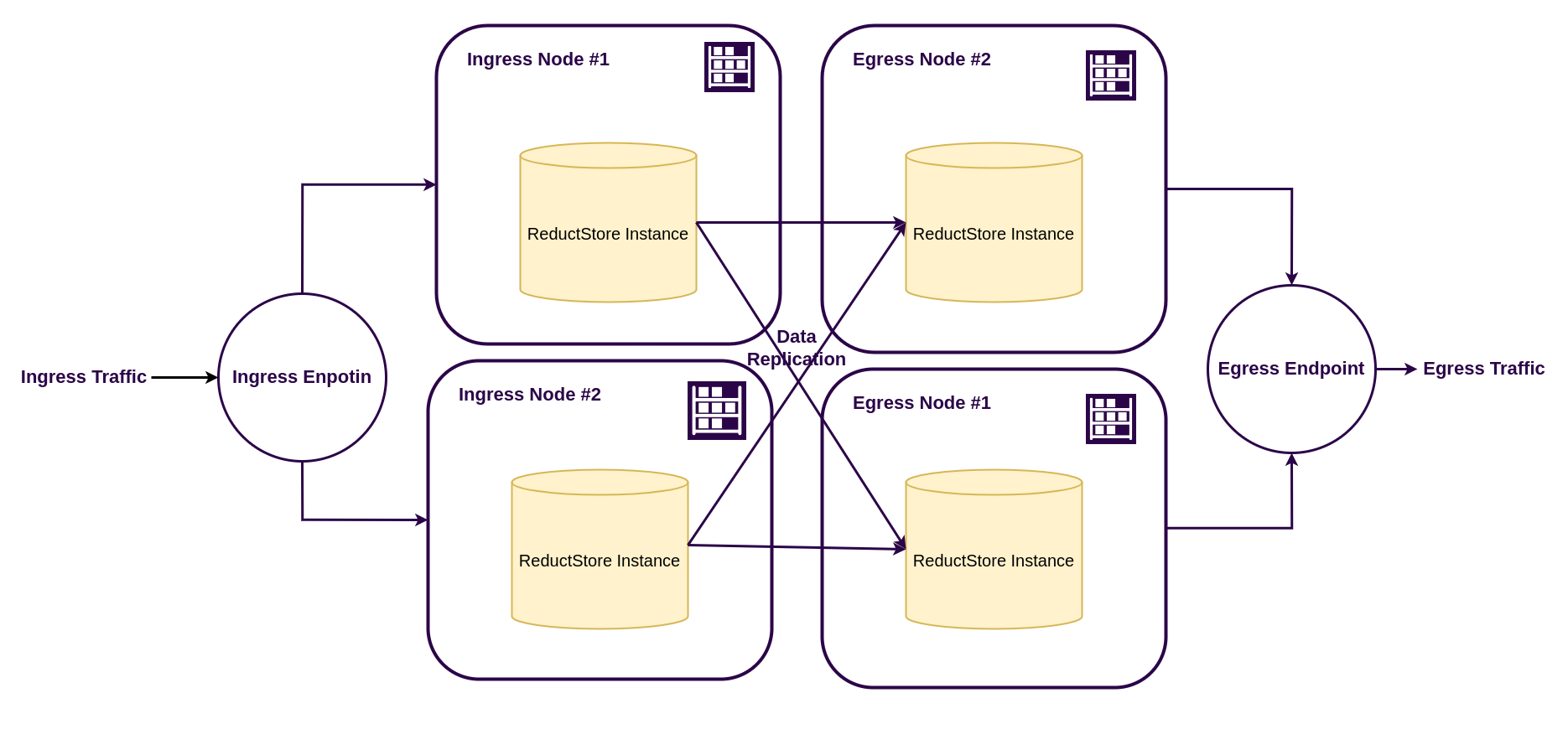
If you’re collecting high-rate sensor or video data at the edge and need zero-downtime ingestion and fault-tolerant querying, an active–active ReductStore setup fronted by NGINX is a clean, practical pattern.

This tutorial walks you through the reference implementation, explains the architecture, and shows production-grade NGINX snippets you can adapt.

What We’ll Build

We’ll set up a ReductStore cluster with NGINX as a reverse proxy, separating the ingress and egress layers. This architecture allows for independent scaling of write and read workloads, ensuring high availability and performance.

NGINX Resilient Deployment